LEGO Star Trek Minifigures: The Next Frontier for Investors and Collectors
Published: 1 year ago
Last Updated: 8 months ago
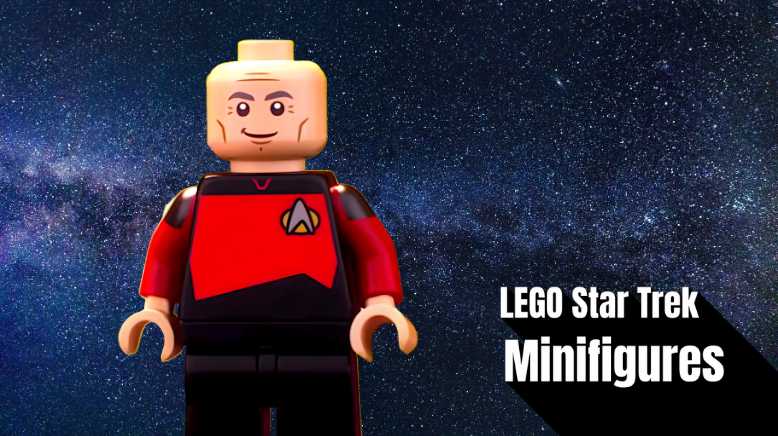
When LEGO revealed a 15-second teaser of a Captain Picard LEGO minifigure, fans knew it marked something special — the arrival of Star Trek in brick form. After decades of waiting, the USS Enterprise NCC-1701-D is preparing for launch, and with it comes a brand-new lineup of LEGO Star Trek minifigures. For LEGO investors and collectors alike, this debut could open the next great frontier of sci-fi investment.
Learning from LEGO Star Wars
To understand the potential of LEGO® Star Trek minifigures, it helps to look at the franchise that set the benchmark. Since its 1999 debut, LEGO® Star Wars™ has grown into a 1,000-set empire with an average annualised growth of 11 %. Many of its most valuable assets aren’t the ships — they’re the minifigures.
| Minifigure | Origin | Investabrick Value |
|---|---|---|
| Chrome Gold C-3PO | 2007 Promo | $2,947 |
| Cloud City Boba Fett | Set 10123 Cloud City (2003) | $2,619 |
| Toy Fair Yoda | 2013 Promo | $1,554 |
| Chrome Darth Vader | 2009 Promo | $577 |
| Cloud City Lando Calrissian | 10123 Cloud City (2003) | $496 |
These figures show how scarcity, nostalgia, and cultural significance can combine to create long-term value. Each now trades far above the price of the sets they came with — often accounting for the majority of total aftermarket worth.

The Rumoured Enterprise Crew
While LEGO hasn’t confirmed any official details, the first Star Trek wave is rumoured to include a full bridge crew: Captain Picard, Riker, Data, Worf, Geordi, Dr Crusher, Troi, Wesley, and Guinan. If true, this would give investors a strong mix of lead characters and fan favourites — the perfect blend for collectability.
Uniform variations (command, science, operations) could make future sets even more desirable. Just as LEGO Star Wars produced dozens of Luke Skywalker and Darth Vader variants, a long-running Star Trek line would generate its own uniform evolutions and character updates.
For LEGO investors, early minifigures in a brand-new theme can be gold. When Star Wars launched, its first minifig sets — like 3340 (Emperor Palpatine, Darth Maul and Darth Vader) — cost $5 and now command nearly $200. If Star Trek achieves even a fraction of that trajectory, day-one buyers could see serious upside.
What Makes LEGO Star Trek Minifigures Unique
LEGO Star Trek occupies a sweet spot between nostalgia and novelty. The fan base is multigenerational, spanning those who watched The Next Generation live and newer fans discovering it through streaming. Combine that with LEGO’s emphasis on premium design for adult builders, and the stage is set for strong cross-market appeal.
Each figure is likely to feature detailed printing — insignia, rank pips, and potentially dual-moulded arms or legs. Accessories such as tricorders, phasers, and engineering kits would only strengthen their collectability. While the set’s core appeal is the model itself, the minifigures are what tie LEGO and Trek together — character, story, and emotion in a few centimetres of plastic.

LEGO Investor and Collector Outlook
For LEGO investors, the potential pathways mirror those seen in Star Wars:
- Initial part-out value – Early resellers can capitalise on launch scarcity by parting out exclusive minifigs separately.
- Short-term hold – As with many UCS-scale debuts, sealed sets typically appreciate quickly after retirement due to limited supply.
- Long-term strategy – Holding a complete first-edition Enterprise set (and its launch GWP, if included) for 3–5 years could produce sustained double-digit returns as collectors seek “complete” originals.
LEGO collectors, meanwhile, gain the satisfaction of owning the first official LEGO Star Trek crew — a milestone that merges two of the biggest fandoms in popular culture. With LEGO Star Wars minifigures continuing to dominate aftermarket sales more than 25 years later, it’s clear how powerful that combination of nostalgia and exclusivity can be.
Crossover Potential and Collector Dynamics
Star Trek’s arrival opens a bridge between two of LEGO’s most passionate fan bases. Many dedicated LEGO collectors are also lifelong sci-fi enthusiasts, and crossover franchises like Star Wars and Marvel have already shown how shared audiences drive sustained aftermarket activity. Star Trek figures could tap that same dual demand—appealing to LEGO minifigure collectors and Star Trek memorabilia buyers alike.
Equally important, the crew’s distinctive uniforms and ranks offer natural variation for future waves—command red, science blue, engineering gold—creating a collect-them-all dynamic that fuels long-term interest. If LEGO expands the line to include other ships or series, these first nine figures will remain the “founders,” the must-own originals that anchor every future release.
For both LEGO investors and collectors, that combination of cross-market appeal and foundational status makes the Enterprise crew one of 2025’s most promising new collectibles.
Final Thoughts
LEGO Star Wars proved that minifigures can become blue-chip assets in their own right. LEGO Star Trek now stands at the starting line of a similar journey. With its first wave expected to deliver screen-accurate uniforms, fan-favourite characters, and the kind of scarcity that drives long-term appreciation, the parallels are clear — and the opportunity is fresh.
For LEGO investors and collectors alike, these aren’t just minifigures; they’re the foundation of a brand-new universe. And if history repeats itself, the first crew to go boldly into LEGO Star Trek may one day become the next generation of LEGO legends.
Author: Jason Carden
Jason’s background in web design and photography gives him a natural eye for detail, presentation, and storytelling. His AFOL journey began when he rebuilt some of the classic sets he remembered longing for as a child in the 1980s. What started as nostalgia quickly became a serious collecting habit. Jason’s collection reflects LEGO’s golden eras, with a particular love for Classic Space, Pirates, and early Technic. He enjoys exploring how LEGO design has evolved and documenting the history behind iconic sets.
See Jason's Articles